


How French Toll Motorways Work: Complete Guide

francia-1

Are you planning a road trip through France or do you need to drive across the country and aren't sure how the toll motorways work? If so, you aren't the only one. The French toll system can be a bit confusing at first, especially for international drivers, but it is actually much simpler than it looks. Understanding how they work, how much they cost, and how to pay will help you travel with peace of mind, avoid surprises, and make the most of your route through one of the most beautiful countries in Europe.

The toll motorways in France are all part of the road trip experience: they are fast, well-maintained, and designed to connect cities and regions quickly and efficiently. However, they also involve costs and rules that are worth knowing before you get behind the wheel.

In this guide, we’ll explain clearly how tolls in France work, how much they cost, how to pay, and what you need to keep in mind if you’re travelling in a hire car. That way, you can focus on the important bit: enjoying the journey.

How French Toll Motorways Work

The toll system in France is primarily based on the distance you travel. This means you don't just pay a flat fee for joining the motorway; instead, the price depends on exactly how many miles you’ve covered.

In most cases, the process is straightforward. When you pull onto the motorway, you take a ticket from the machine at the entry barrier. This ticket logs your exact entry point. Later on, when you leave the motorway, you pop that ticket into the machine at the exit station, and the system automatically works out how much you owe.

In some slightly more modern regions, this system is being replaced by a 'free-flow' barrierless model, where cameras record your number plate and payment is sorted afterwards.

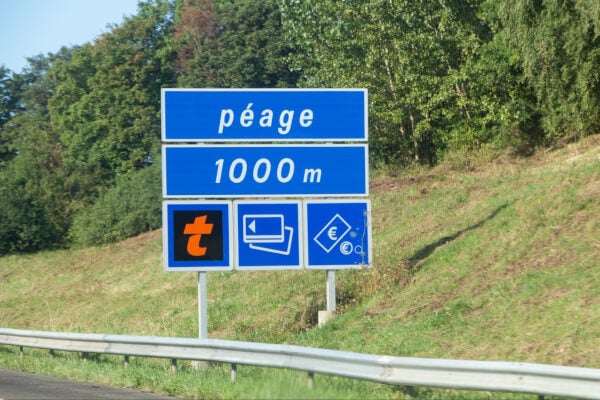
The toll stations (or péages) are clearly signposted and usually offer several different lanes depending on how you want to pay. This helps keep traffic moving and cuts down on waiting times, especially during the busy holiday seasons.

How to pay at French tolls

One of the perks of the French system is that it offers plenty of ways to pay, making it pretty straightforward for most international travellers.

> How to park in Paris: zones, prices, and the best parking options

The most common option is paying by credit or debit card, as the vast majority of tolls accept Visa and Mastercard. In many cases, you can also use contactless payment, which makes the whole process even nippier.

You can still pay with cash, although you'll find this option appearing less often in the more modern lanes. If you do decide to use cash, it’s a good idea to keep some coins or small notes handy to avoid any faff with the automated machines.

For regular commuters or locals, there is an electronic system called Télépéage, but for most tourists, it isn’t really necessary.

francia-2

What is Télépéage and when is it worth it?

Télépéage is an automatic payment system that allows you to go through the tolls without having to stop. It works via a small tag placed on the car's windscreen that communicates with the toll stations as you drive through.

When the vehicle passes through a dedicated lane (marked with a large 'T'), the system detects the device and automatically processes the payment. This setup is particularly handy for anyone doing long-haul trips or using the motorways frequently, as it helps you skip the queues and speeds up the whole journey.

However, for most tourists visiting France for just a few days or weeks, it’s usually not worth the bother of setting up an account, as the standard lanes are efficient enough. So, if you’re on holiday in France and have hired a car to get around, you almost certainly won't need this kind of device.

How Much Do French Toll Motorways Cost?

The price of tolls in France varies depending on the distance you cover, the type of vehicle you’re driving, and which specific motorway you’re using. As a general rule, the cost usually sits somewhere between €0.09 and €0.15 per kilometre for a standard car.

This means that on longer stretches, the costs can really start to add up. For example, driving from Paris to Lyon might set you back between 35€ and 45€, while a trip from Paris down to Bordeaux could cost roughly 50€ to 60€. On shorter routes, such as Marseille to Nice, the price is usually quite a bit lower.

While these costs might seem a tad pricey, it’s worth remembering that French motorways are fast, safe, and kept in excellent condition, which cuts a significant amount of time off your journey.

How to Work Out Toll Costs Before You Set Off

> The 3 best routes along the French Riviera from Nice

If you’re on holiday in France, you’ll likely want to save as much as possible, so planning your budget is essential before heading out on a road trip. Fortunately, there are plenty of online tools that let you estimate the approximate cost of tolls based on your specific route and vehicle type.

Sat-nav systems and Google Maps also give you the option to choose between the quickest routes (which usually involve tolls) or alternative routes that avoid them altogether. This helps you find the right balance between travel time and cost, depending on what you prefer.

It’s also a good idea to factor in fuel costs alongside the tolls, as both will play a part in the total cost of your trip.

Additionally, remember that another great way to save money while getting around France is by securing the cheapest hire car possible. Comparison sites like CarJet allow you to find the lowest prices, as they compare hundreds of companies to ensure you always get the best deal on your car hire.

francia-3

Hire cars and French tolls: everything you need to know

French tolls often raise a few questions, especially if it’s your first time visiting the country. Generally speaking, they are considered more expensive than in other European countries, but in return, you get a motorway network that is incredibly fast and efficient. Tourists can use them without any hassle at all, as the system is designed to be straightforward and accessible.

Most tourists visiting France choose to hire a car , and there are a few common queries that are worth clearing up:

Do I Need to Pay Tolls in a Hire Car?

Yes, you do. Paying the tolls is always the responsibility of the person driving the vehicle. So, if you hire a car in France and use the toll roads, you’ll need to cover those costs yourself as you go.

What Happens if you use a French Toll Motorway Without Paying?

To drive with peace of mind on French motorways, it's important to understand what happens if a toll isn't paid correctly. On traditional motorways with the ticket and barrier system, payment is compulsory at the exit station, so it’s impossible to carry on with your journey without completing the process. However, on some motorways with automatic or barrierless systems, the procedure might be less obvious to international drivers.

In these cases, if you drive through a toll zone without paying at the time, you usually have a limited window to settle the balance using the methods provided by the motorway operator, such as paying online or at authorised points. If the amount isn’t paid within the set timeframe, the driver may receive a fine managed by the relevant authorities, which can significantly increase the original cost of the toll.

Where are the Tolls Located in France?

Tolls aren't usually found inside the cities themselves, but rather on the links between them.

If you decide to book a hire car with CarJet and have any questions regarding French tolls or anything else, 24-hour assistance is available on our website.